Vision Beyond AI: Yingyue Lake Innovation Salon 006
Published:
Nearly 100 researchers, entrepreneurs and industry practitioners met at the Talent Hub for 11 talks on 3D vision, world models, AI for Science and enterprise agents—connecting frontier research with practical applications.
Where research and industry meet
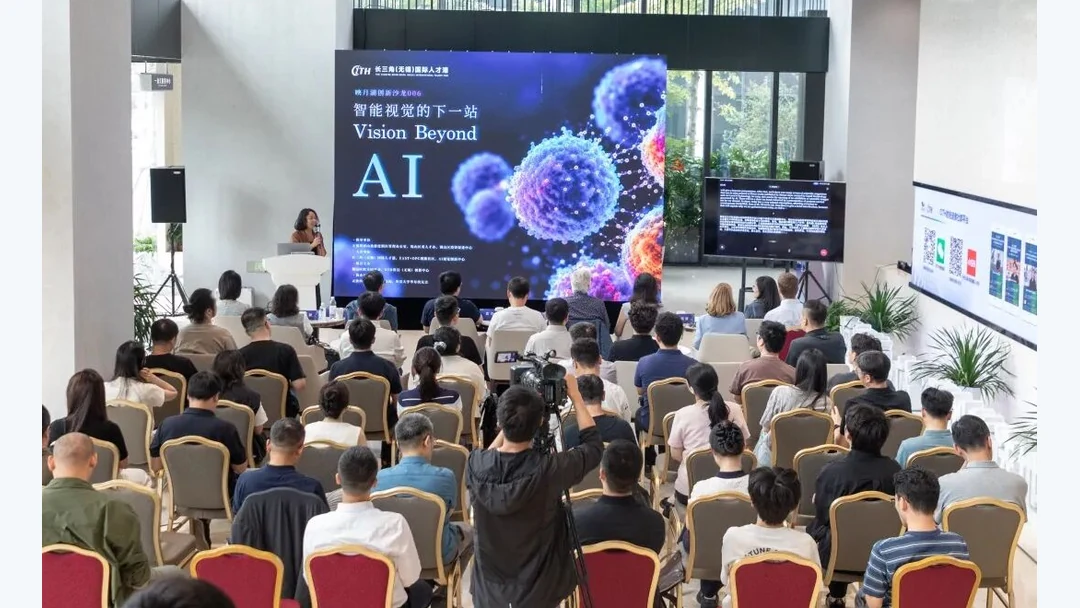
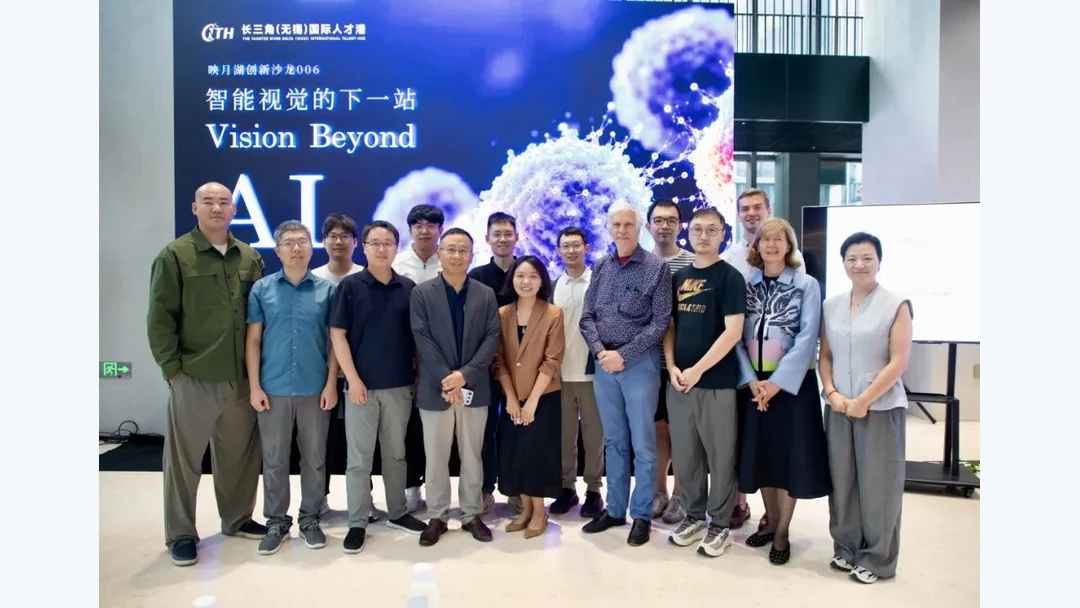
Before the National Day holiday, nearly 100 guests from universities, research institutes, technology companies and startups gathered at the Yangtze River Delta (Wuxi) International Talent Hub for the sixth Yingyue Lake Innovation Salon, “Vision Beyond AI: The Next Frontier of Visual Intelligence.”
Participants included Talent Hub entrepreneurs, AI founders and researchers from Beijing, Shanghai, Hangzhou and Shenzhen, and visitors from Europe who have maintained academic and entrepreneurial connections with Professor Luc Van Gool. Discussions covered 3D vision, world models, efficient visual models, AI for Science, 3D generation, intelligent sports and enterprise agents.
We thank the Wuxi Cuipingshan Tourism Resort Administrative Office, the Xishan District talent affairs office and the Xishan District Investment Promotion Center for their guidance. The event was jointly organized with the Xishan District Western Returned Scholars Association and GTB Leuven (Wuxi) Innovation Center, with support from Lingji Technology, the KU Leuven alumni association and Yingyue Lake Science and Technology Park.
Luc Van Gool: Learning to understand 3D worlds from 2D teachers
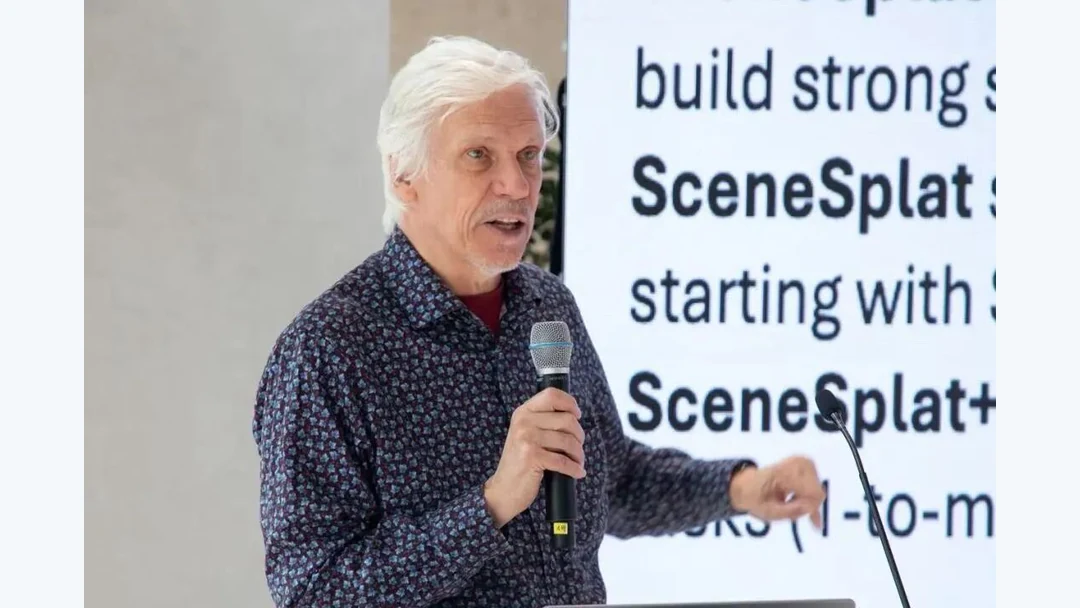
Luc Van Gool, a computer vision scientist formerly at ETH Zurich and KU Leuven and now a professor at INSAIT and head of ELLIS Sofia, opened the salon with “CHORUS: Understanding the 3D World from 2D Teachers.”
This was his third visit to the Talent Hub. As one of the initiators of its AI Vision Innovation Center, he has visited Wuxi each year during the Hub’s first three years to exchange ideas with AI entrepreneurs, researchers and former students. This time he shared his team’s latest work on 3D visual understanding.
3D Gaussian Splatting (3DGS) can reconstruct real scenes efficiently and produce convincing visuals. Yet a scene that looks realistic is not necessarily one that a machine understands in terms of objects, spatial relationships and meaning.
CHORUS uses a multi-teacher pretraining framework to transfer knowledge from different 2D foundation models into native 3D Gaussian representations. Language-aligned, general visual and object-aware models act as complementary teachers, training a 3D scene encoder through a shared backbone and teacher-specific projectors.
Once trained, the system extracts structured semantic features directly from 3D Gaussian parameters. Building on ShapeSplat, SceneSplat and SceneSplat-49K, CHORUS extends semantic encoding across 3D Gaussian and point-cloud inputs and supports semantic segmentation, instance segmentation and open-vocabulary visual question answering.
The potential extends beyond asking what is in a scene. A user might ask where a red bag is, in what order furniture should be moved, or which traffic signs are visually obstructed in a city digital twin. A 3D scene that can be queried through language, searched semantically and used in task decisions becomes an interactive source of spatial information.
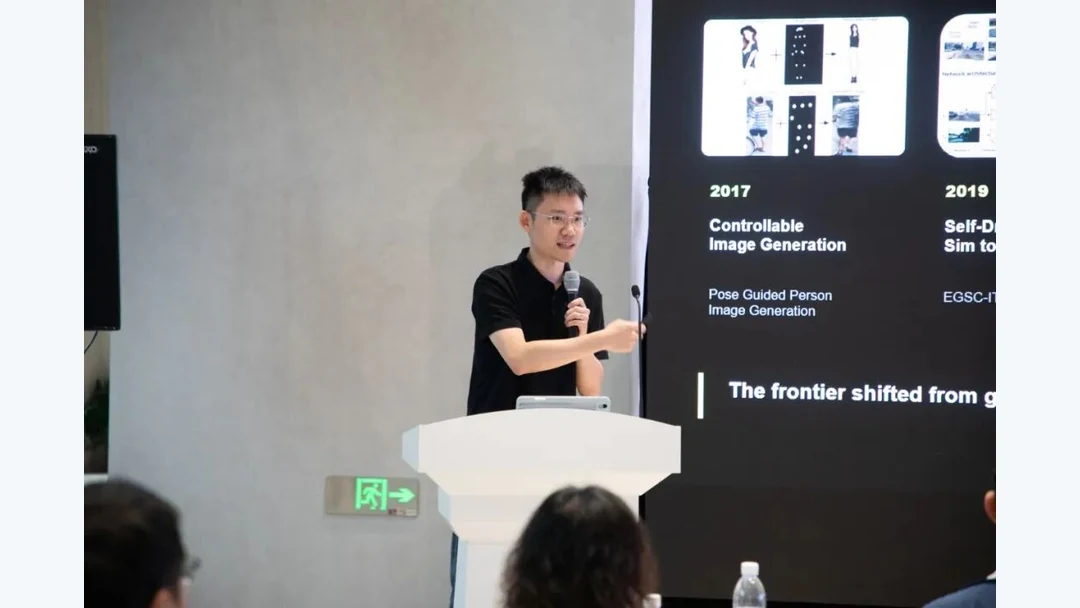
Jia Xu: From controllable video generation to physically plausible world models
If 3D vision asks how AI understands space, Professor Jia Xu of Dalian University of Technology asks how it understands change and the rules of the real world. A former student of Luc Van Gool, he studies generative models, video understanding and world models and has worked at Huawei’s Noah’s Ark Lab, SenseTime and Google Research.
Increasingly realistic video generation does not automatically follow physical laws. A world model must also account for actions, causal relationships and changes between states. Jia describes it as a conditional probability model that predicts future states from historical observations, the task environment and action sequences.
He identified three requirements: controllability, physical plausibility and interaction consistency. His team’s work includes VFX Master, Camera Master, multi-shot video generation and physical priors: reference-video control for visual effects, depth and trajectory constraints for camera movement, and physical knowledge from vision-language models to improve processes such as sinking metal and flowing liquids.
Transition VLM explores multi-step processes such as kneading dough. For embodied intelligence, MemWorld explores persistent 4D spatiotemporal memory to handle wrist-camera occlusion, retrieval during long tasks and consistency between actions and the environment. The direction moves from generating a plausible-looking clip toward predicting what happens when an action changes the world.
Sun Guolei: Making multimodal visual models more efficient
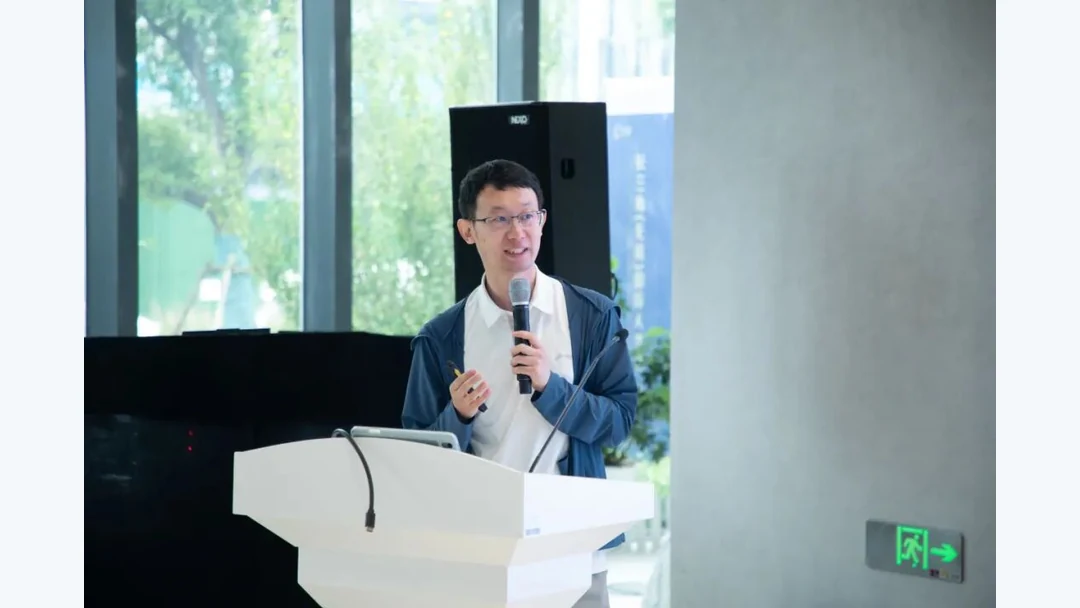
Professor Sun Guolei of Nankai University, also a former student of Luc Van Gool, works on visual models, vision-language models and long-video understanding. His presentation explored how to preserve model capabilities while reducing the compute and storage costs of visual information.
As models grow, images and video produce large numbers of visual tokens. His team studies token compression and quantization to lower that inference burden.
In the research examples presented, the visual input of some 7B models was reduced to 16 tokens while retaining approximately 92% of performance and achieving about a 2.4-fold speed improvement. The ASA method reduced visual tokens to around 10% of the original count and computation to around 14%, while retaining near-original performance on some tasks. These are results from the specific studies discussed, rather than guarantees for every model or workload.
The team also explores low-bit approaches such as W4A4 to reduce weight and activation precision and lower memory and inference costs. The practical aim is to bring stronger visual models into ordinary workstations, edge devices and a wider range of real applications.
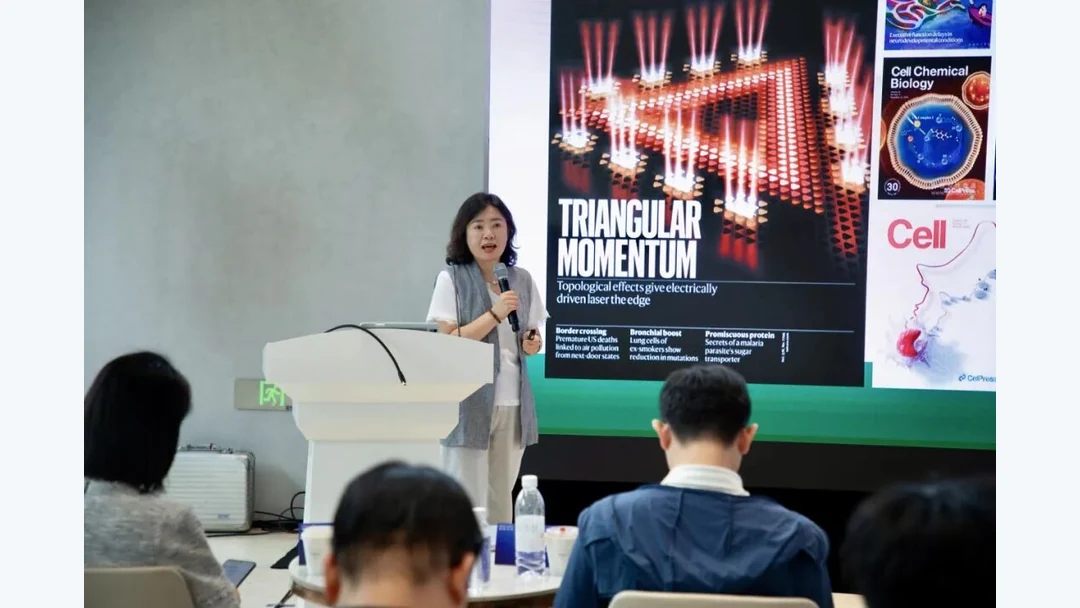
Han Ying: Scientific images need accuracy as well as visual appeal
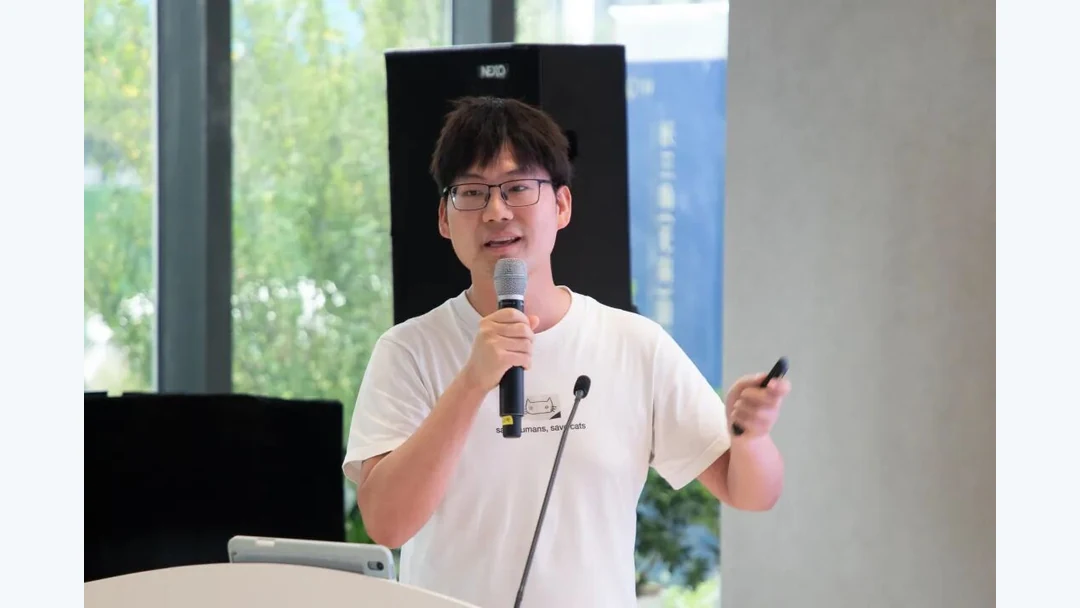
Scientific visualization specialist Han Ying, founder of Songdi Technology, examined the relationship between AI and scientific imagery. Since founding her company in 2007, she has spent nearly two decades serving universities, research institutes and international scientific publishing, including visual projects associated with Nature, Science and Cell.
At the salon, she invited the audience to distinguish manually produced scientific images from AI-generated ones. Generative AI is changing production efficiency, but that does not mean it understands the science behind an image.
Complex and visually rich images can still contain redundant information, incorrect text and flawed scientific logic. Scientific publishing needs accurate representations of experimental mechanisms, data relationships and conclusions; some publishing organizations therefore remain cautious about fully AI-generated scientific images.
Han sees AI as a valuable supporting tool for visual inspiration, backgrounds and auxiliary materials. Songdi is also working with teams including Lingji Technology on editable online drawing tools, models for scientific imagery and platforms such as “科图网.” Scientific visualization offers a useful test of the difference between drawing an image and understanding science.
Jin Tonghui: Moving AI from research assistance toward research execution
Jin Tonghui, founder of Lingji Technology, discussed how AI for Science can accelerate research, technology development and product delivery. He holds a doctorate from ETH Zurich, works on AI for Science and visual generation, and has published research in journals including Nature Nanotechnology and Advanced Materials.
He introduced Lingji’s AI for Science agent ecosystem and leapsea, a desktop agent for academic and industrial researchers. Its self-developed AI4S Harness and post-training system aim to make AI for Science more accessible.
Users can express a task in natural language and use a closed-loop agent for scientific visualization, research reproduction, product development, engineering implementation and computer use. Examples included analyzing AlphaFold principles or lysozyme research mechanisms, and producing specialist engineering files such as GDS.
The team reported testing leapsea with BioBench100, Math Science Bench and ASvA Bench and described its results as among China’s leading levels in those evaluations. This was the team’s presentation of its own benchmark findings.
The Skill Market concept enables researchers to package professional methods as reusable agent skills for sharing and commercialization. AI for Science is moving toward systems that circulate research expertise, execute development workflows and potentially connect with real experimental equipment.
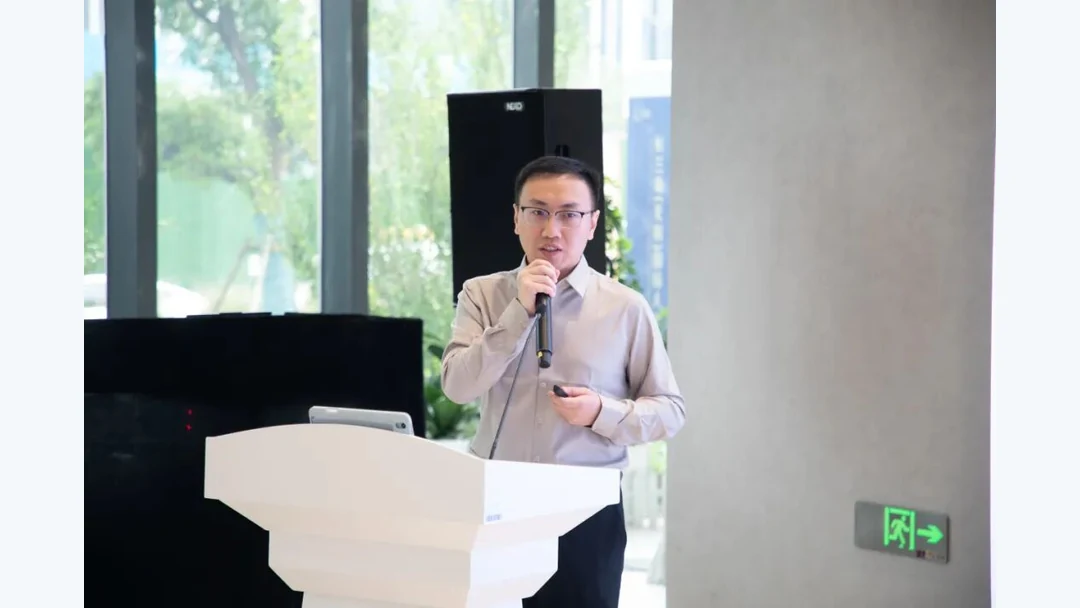
Ma Liqian: AI video creation needs a complete workflow
Ma Liqian, co-founder and CTO of Creati AI, is a former student of Luc Van Gool with a doctorate from KU Leuven and research experience at Toyota Europe and Adobe. He explored how AI can participate in video production beyond answering questions in a chat box.
Creators need control over characters, scenes, shots, pacing and local details. Stronger generation models alone do not remove these professional requirements, and simple text prompts often cannot express them adequately.
Creati AI is exploring an Agent-driven Video Canvas that turns AI into an executor within the creative workflow. It spans creative interpretation, scripts and storyboards, asset organization, video generation and post-production, with emphasis on consistency and local editing rather than regenerating an entire frame for every revision.
Such workflows are developing across e-commerce UGC, short-form video, branded content and creative films of two to five minutes.
Zhang Run: Bringing AI-generated 3D into production
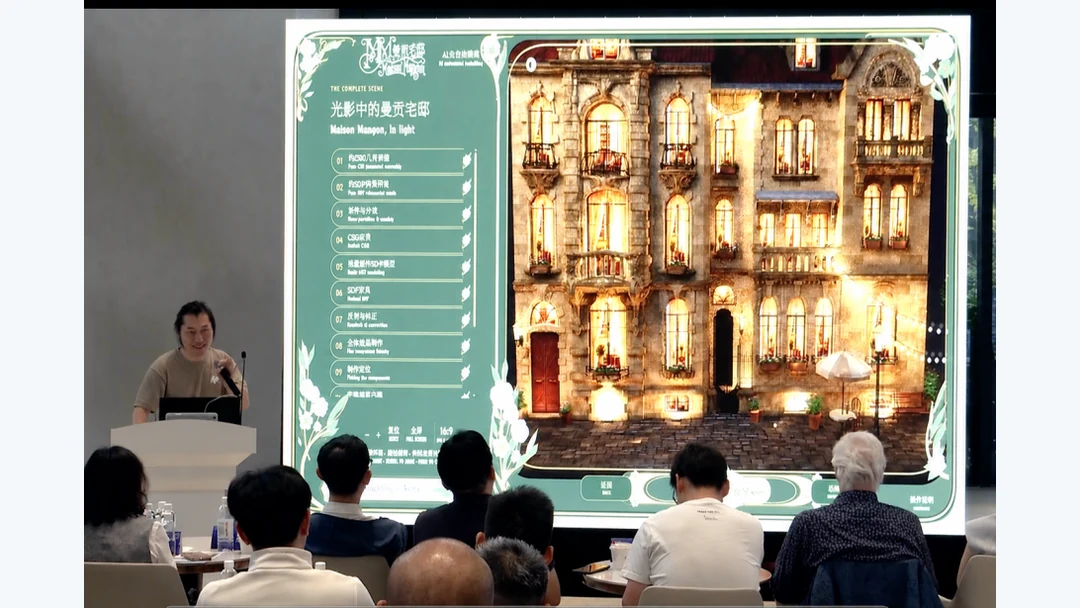
Zhang Run of 喵不灵文化 discussed AI-generated 3D spaces. With a background in architecture and game art, including work on Infinity Nikki, he explores architectural history, generative design and workflows for an “AI Hengdian” virtual production environment.
He described two main routes: composing relatively simple geometric components with models such as GPT, and generating complex meshes with volumetric models such as Tripo3D or Neural4D. The latter can produce extremely dense topology with millions of polygons, which is difficult to use directly in production.
His team combines both approaches. People first annotate architectural structure, then GPT assists with component decomposition. Simple components use geometric generation; complex structures use volumetric models followed by retopology and structural optimization to restore editability.
In a specific demonstration, one architectural component consumed 10% of an available quota using general GPT capabilities, compared with 0.067% for a similar component after professional experience had been packaged as a skill-driven workflow. The figures describe that example rather than a universal efficiency benchmark.
The central production question is whether a system creates stable, reusable and editable workflows, beyond simply generating a 3D object.
Gao Hao: Understanding sport through visual AI
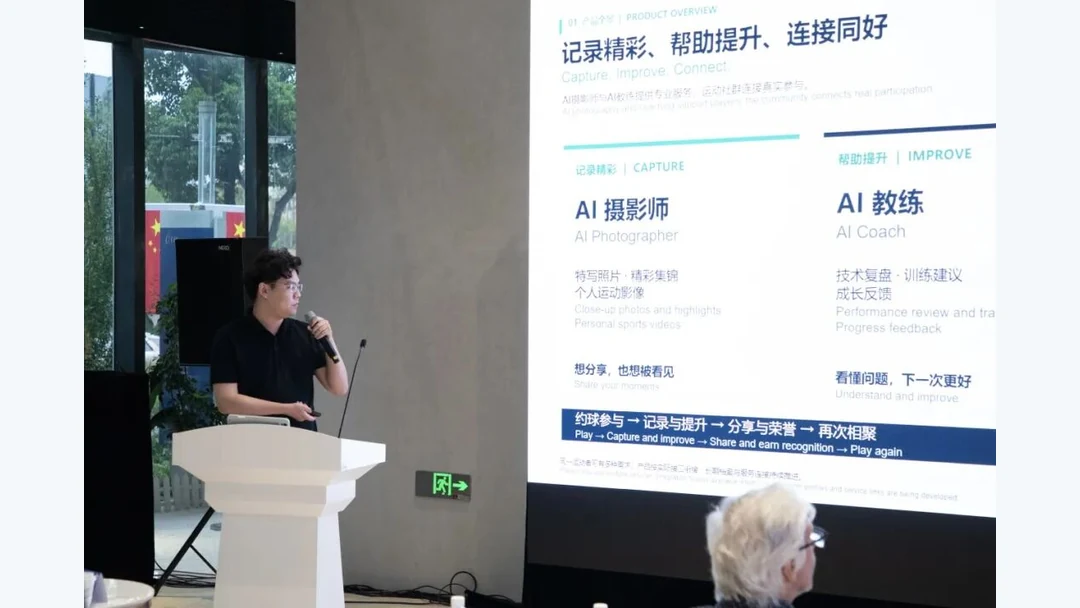
Gao Hao, founder of 曦跃智能科技, brought computer vision into sport. His team studies badminton, tennis, pickleball, skiing and football, using AI cameras, AI coaching and community products to turn training data into usable information.
Its BAMDAS sports model combines high-speed object tracking, human-pose analysis and 3D trajectory reconstruction. A hardware-and-software sports Copilot connects perception, tactical analysis, coaching and automatic editing for training, competition and sharing.
At the event, the team reported reaching more than 100,000 amateur users within six months, serving over 20 professional teams including national and provincial squads, and supporting overseas users including Danish national-team players. Starting with badminton, it is expanding into more sports and consumer use cases.
In badminton, 2D-to-3D reconstruction captures court state and shuttle trajectories to produce more than 80 professional metrics. The team has accumulated almost a decade of sports data spanning professional and recreational athletes and works with national teams, provincial teams and international events.
Visual AI can turn analysis that once relied on coaching experience and manual observation into information that can be quantified, recorded and assessed over time.
Sun Zhen: Enterprise AI must solve real business problems
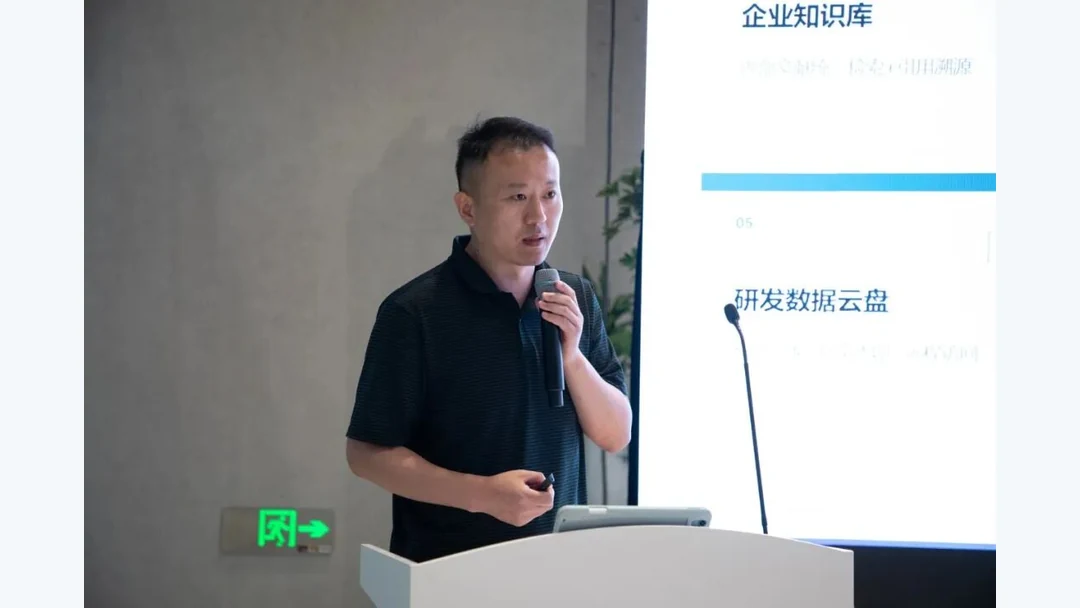
Sun Zhen, founder of 浩智辰软件, described practical enterprise AI deployment. His team focuses on AI for biomedicine and industrial vision.
In biomedicine, it is building a platform spanning enterprise knowledge bases, intelligent retrieval, Deep Research, PDF analysis, target tracking, report generation and AI-driven drug discovery, with plans to provide it as SaaS.
For industry, the team works with companies including China Merchants Heavy Industry to vectorize scattered SKUs, terminology, historical quotations and business documents so employees can retrieve information faster. Another project uses industrial vision for cable defect detection, microscopic measurement and core identification and has entered final acceptance.
Sun observed that large enterprises are deploying more agents, while internal IT teams can address only part of their specialized needs. Valuable enterprise AI requires a deep understanding of specific business problems.
Zhu Yiwei: Start with specific problems to bring AI into business
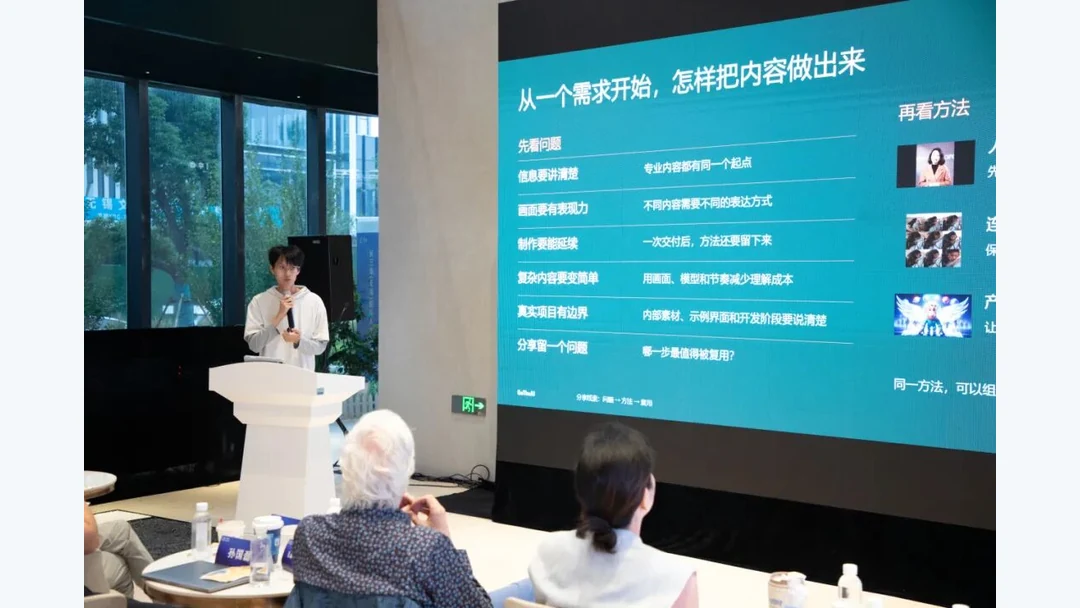
Zhu Yiwei, founder of 构得智能科技 (GoTheAI), approaches enterprise AI through lightweight tools. His work spans generative AI, workflows, knowledge bases and Vibe Coding. The “AI as a Service” approach targets many small, specific vertical needs.
For video production, the team uses real shoots to establish high-quality reference material, then expands the visuals through 3D and AI generation. Traditional post-production resolves details that AI generation cannot yet control reliably.
For AI short dramas, it is experimenting with a production workbench containing filmmaking agents and combined skills to integrate AI generation into the actual production workflow.
The team is also building a project-management workbench and an experience library, with plans for tools that address recurring tasks. A specific problem, a repetitive job or a small tool that saves time can provide a practical entry point for enterprise AI.
Zhao Zhicheng: From using AI to autonomous task execution
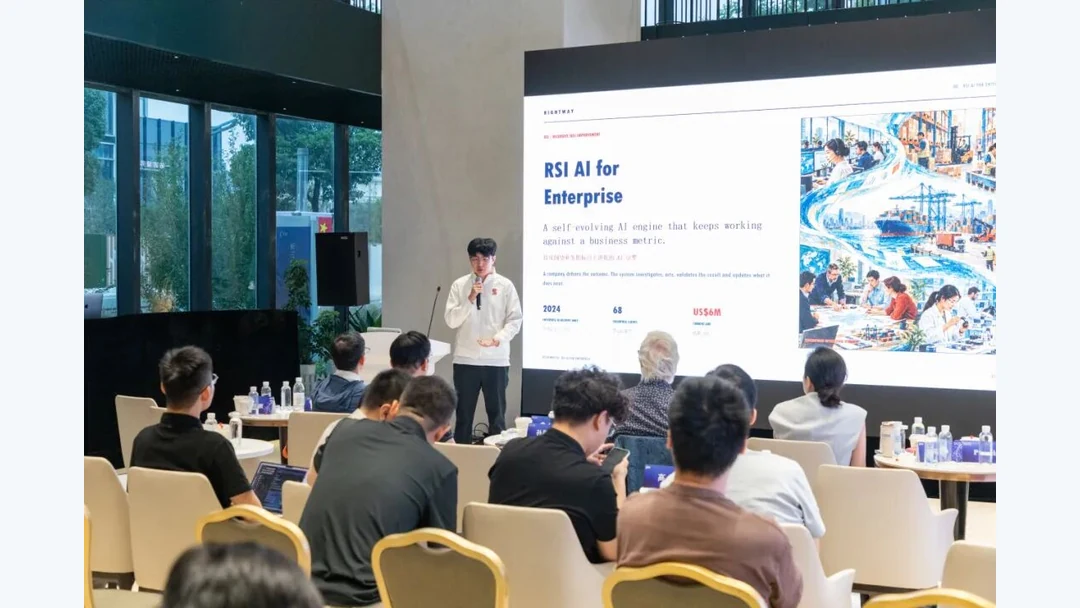
The final presentation by Zhao Zhicheng looked toward the next stage of agents. A KU Leuven alumnus who later pursued a doctorate in quantitative analysis at NUS, he has stepped away from the academic path to explore Agent OS and enterprise intelligent systems.
His central idea is to move from waiting for questions toward understanding goals, decomposing tasks, executing them and verifying the results.
The enterprise Agent OS Astra accepts an abstract business goal, scans processes, breaks down tasks, coordinates agents and uses A/B testing and ongoing verification to produce a proof of concept and ultimately a deployable solution.
In a case involving a global human-resources services company, models including Gemini and DeepSeek participated while Astra ran for several days, diagnosing and iterating on problems toward a production-ready version. For market expansion, it can examine supply chains, channels and competitors and produce a market-entry proposal for further validation.
The emerging direction is enterprise workflows in which AI organizes tools and agents around a goal, rather than requiring a person to direct every individual task.
From visual intelligence to meaningful connections
In the closing discussion, Luc Van Gool highlighted opportunities in archaeological reconstruction, architectural visualization and digital twins. AI can rapidly propose alternative reconstructions of damaged historic buildings, while architectural visualization must balance realism with spatial and structural credibility. The AI Vision Innovation Center can help connect research with practical exploration.
The salon ran for more than four hours, from the afternoon presentations through open discussion. Participants stayed after the formal program to exchange ideas about technologies, applications and specific projects across cities, disciplines and industries.
Together, the presentations mapped a broader visual-AI landscape: from 2D vision to 3D understanding, from world models and generative AI to science, sports, industry and enterprise applications, and onward to agents that connect with the real world.
We look forward to the next Yingyue Lake Innovation Salon and to an AI Vision Innovation Center that brings together more people, projects and ideas. Let visual AI bring people together—and let new possibilities begin here.
Yingyue Lake Innovation Salon: Turning ideas into practice
The Yingyue Lake Innovation Salon is an innovation exchange series created by the Yangtze River Delta (Wuxi) International Talent Hub. It provides an open, diverse and cross-disciplinary platform for sharing ideas and connecting resources.
Each session explores how frontier technologies can respond to real needs, become productive capabilities and create social value. Researchers, practitioners, entrepreneurs, investors and media participants from Wuxi, across China and around the world share insights, experience and ideas.
From Wuxi’s eastern gateway, we continue connecting talent, technology, industry and capital. We aim to bring expertise together, turn ideas into practice and help Xidong New City become a place for innovative people, new thinking and future possibilities.
Yangtze River Delta (Wuxi) International Talent Hub
Rooted in the Yangtze River Delta, focused on the Guangdong–Hong Kong–Macao Greater Bay Area and open to the world, the Talent Hub brings together global resources for technological innovation. It aims to be the region’s first stop for returning overseas talent and a preferred destination for entrepreneurship and innovation.
With overseas talent at its core and a focus on AI, global expansion services and other emerging industries, the Hub provides business, government and daily-life support across the full innovation and entrepreneurship journey. We are building a lively and welcoming community that combines entrepreneurial spirit with care for people.