Talent Hub in Wuxi Daily: Small Teams Put Down Roots and Big Dreams Grow
Published:
Wuxi Daily visits the EAST+ OPC Innovation Community to see how workspaces, investor introductions and pilot projects help small teams develop products and find partners.
Stories from Talent Hub companies
A short AI film created by Talent Hub resident Mansia Studio recently premiered on CCTV.com as a preview for the 2026 China International Intelligent Communication Forum. In it, Taibo, Xu Xiake, Gu Kaizhi and A Bing bridge the centuries for an unusual video call.
Mansia Studio specialises in AIGC film and video. It produces AI short-form dramas and animated series for overseas audiences, as well as advertising and promotional films for brands, cultural institutions and tourism projects. The team can combine AI-generated imagery and live action at different stages of production, from script to finished film. Its partners include Tencent, Youku and CCTV, spanning media, consumer businesses, culture, tourism and technology.
Wuxi Daily went on to look at other companies based at the Talent Hub. GoTheAI, Xiyue Intelligent Technology, Xinsong Microelectronics, Meiluodi Technology and Lingji Technology are making progress in their respective fields. Growing a team, launching a product, finding resources and working together are the details of daily life we share with our resident companies.
Here is Wuxi Daily’s report on how the Talent Hub’s companies are growing.
Wuxi Daily’s report
As the Wanshan Lake Marathon began, a short AIGC film started making the rounds on social media. Its mascot Wan Xiaoqi, in orange running gear and bib 001, races through the technology district and landscapes of Xidong New City. The film, titled 《奔赴有道,无问锡东》, was a personal project initiated by GoTheAI founder Yiwei Zhu. It was made independently of the government. Zhu’s company is based at the Yangtze River Delta (Wuxi) International Talent Hub.
Two weeks before the race, Zhu decided to walk the course. Training was beside the point. He brought a camera to capture the morning light on Jiaoyang Road, the slopes of Houshan and the glint of Yingyue Lake, one frame at a time. He wanted to use his technical skills to make an AI short film for the city where he had put down roots.
“I can’t finish a full marathon, but I can take part in a way that suits me,” Zhu said. He saw the film as a metaphor for founders in a year-old OPC community finding their own ways to reach out to the city that had welcomed them. Zhu is part of that story. He arrived with the first cohort at EAST+ OPC a year before, like a seed planted there. Some of those businesses have begun to branch out, while others are still putting down roots.

A desk and an office
Giving founders space to get straight to work
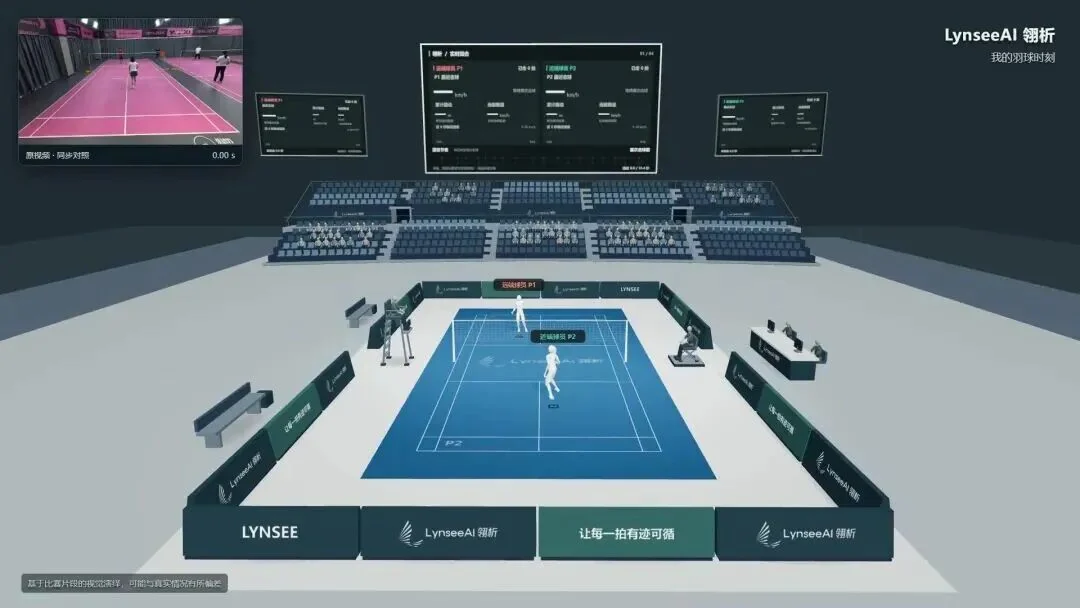
Gao Hao still remembers moving into the Talent Hub. Four desks pushed together were all Wuxi Xiyue Intelligent Technology had. Its Lingxi AI badminton video analysis system could track the shuttlecock in real time to within ±2 pixels and identify strokes with at least 94% accuracy. It was still unknown to the market.
“The Talent Hub gave us a good environment to start a business and let the team put more energy into R&D and reaching customers,” Gao said. The original four desks eventually became a private office, and the Hub has since helped arrange a larger space.
The business grew as well, extending from badminton into tennis, squash, football and winter sports.
AI equipment has been installed and tested at badminton venues in Wuxi. Several leading venues in Beijing are upgrading their facilities, and more than 20 sports venues nationwide are working on installations. Lingxi was introduced at the 2026 Guolin Cup AI Experience Tournament in Baoding and a 2026 youth badminton event in Guiyang with RSL. It also appeared in the interactive area outside the 2026 Sands China Macau Open Badminton tournament. The company has provided match video analysis and data services to Jiangsu City Football League teams and is the designated platform for publishing points for the national youth skiing U-series.
As one of the first companies to move in, Xiyue received workspace and introductions through the Talent Hub. EAST+ OPC initially planned around 13,000 square metres of dedicated space, with flexible desks, private offices, remote meeting rooms and small livestream studios. In conjunction with 240 Yayu talent apartments, these give founders access to work, housing, meeting space and services within five minutes.
“From the beginning, our focus has been on serving a smaller group with a high concentration of strong ideas and potential, rather than filling as many spaces as possible,” said the community’s operations lead.
11 months and RMB 30 million
How funding and pilot sites help technology move faster
Xinsong Microelectronics has grown on a different timeline.
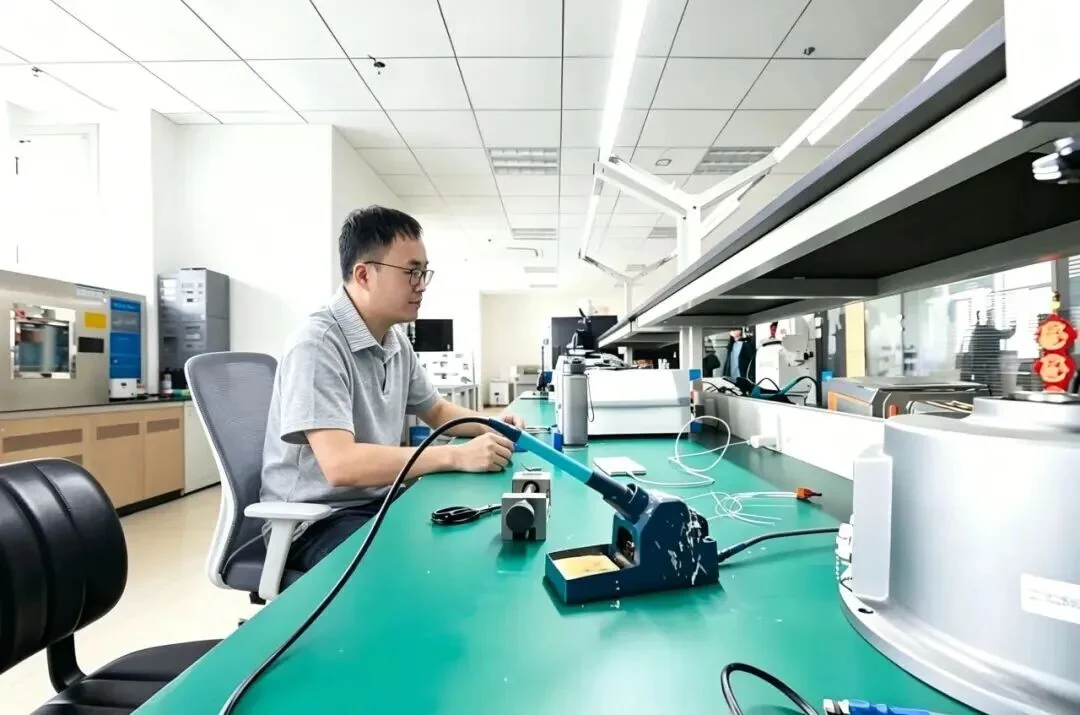
Founded in June 2025, the company is led by Lin Junxuan, a graduate of Beihang University who worked on advanced process development from 28 to 14 nanometres at TSMC, Lattice Semiconductor and Huawei HiSilicon. The company focuses on a “cerebellum” for AI computing, delivering millisecond-scale responses to address GPU latency. Its products target applications such as assisted driving and telecom base stations.
The team completed in 11 months an R&D task that took overseas companies several years, with AI tools giving it a nearly fivefold efficiency gain. The layout of its 2026 driving chip had been finalised and was being prepared for tape-out, with initial deliveries expected at year-end. Its first customer product had already gone to a listed company in Fujian. At the time of reporting, RMB 30 million in funding had arrived, office space had grown to around 260 square metres, and the team had reached 20 to 30 people.
“We focus on GPU–FPGA heterogeneous computing chips. The community helped us connect with the investors and pilot sites that got the business moving,” Lin said. The community works with early-stage investors including Wuxi Venture Capital and Inno Fund, regularly recommending projects and organising pitch sessions. These connections helped Xinsong Microelectronics secure its RMB 30 million in funding.
Meiluodi Technology, which focuses on industrial AI agents, grew from three people to 45, with orders on hand worth more than RMB 10 million. Wuyou Wulü, whose parent company is PowerLaw AI, develops legal AI agents. It had raised more than RMB 150 million and was valued at RMB 500 million. GoTheAI, established in late January 2026, focuses on AIGC and AI content production. It grew from one person to six and took on nearly 20 orders in a little over six months.
At the time of the report, EAST+ OPC hosted more than 60 innovation and startup projects, 25 of which were added in 2026. More than 40 companies were AI-related. Over 60% of the resident team members held a master’s degree or above, nearly 20 held doctorates and more than 65% came from overseas. The community represented 13 countries, with around 120 people regularly working on site.
Neighbours on different floors: large companies pose problems, small teams solve them
Working together to take on larger projects
In May 2026, Wuxi Haozhichen Software founder Sun Zhen signed a contract for an industrial visual inspection project. He needed more people with computer vision expertise and turned to the Talent Hub and its community.
“The team got in touch right away and recommended several OPC businesses once we explained what we needed.” Haozhichen partnered with a company in the community, with each team contributing its own technical expertise. The project had reached user acceptance testing. “Starting a business here feels like joining a big family,” Sun said. Working with neighbours helps small teams take on more complex projects.
The community is making these connections a regular part of its work. It visits major local businesses in sectors including electric vehicles and precision medicine, identifies problems, matches them with technical solutions and organises meetings. It also brings in university experts through a joint AI and data security lab with Shanghai Jiao Tong University and an AI training base with Jiangnan University. State-owned industrial parks and public-sector settings are encouraged to provide early pilot opportunities. At the time of reporting, more than ten had been made available, including promotional video production and mini-program development.
Many of GoTheAI’s nearly 20 orders came through such opportunities: producing digital-human and concept films for the Talent Hub, developing its operations mini program, and producing digital-human promotional videos for two smart factories of a Hong Kong company introduced by the Hub.
Zhu also launched “100 Small Needs” to gather everyday and workplace problems and build lightweight AI tools. A lesson scheduling and tracking tool is in use at an overseas music education institution. A quotation tool for non-standard manufactured products is in development. “Some AI initiatives aim to do everything. We focus on small, specific needs from real life,” Zhu said, “and getting the things people always wanted to make off the ground.”

The ambition of a forest
From bringing together a small concentration of founders
to growing an ecosystem
The first seeds have sprouted. Xiyue went from four desks to a private office, Xinsong Microelectronics was on course to grow from nothing to around 20 people, and GoTheAI went from one person to six. EAST+ OPC wants these businesses to take root together and create a community that goes beyond a handful of standouts.
The Alibaba Enablement Centre and Yingyue Innovation Centre are now in use near the Talent Hub. The AI and Data Security Joint Laboratory with Shanghai Jiao Tong University and the AI training base with Jiangnan University are in place, forming an initial framework of workspace, technology and talent. An AI Enablement Centre developed with Alibaba Cloud is being built to support both computing infrastructure and industry partnerships.
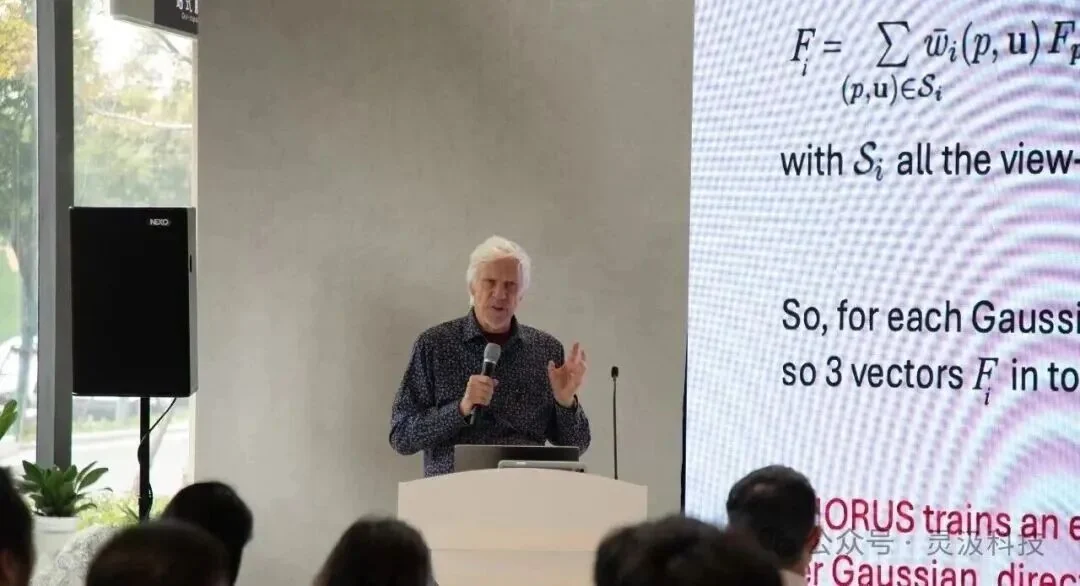
In 2025, Lingji (Wuxi) Technology, led by European computer vision researcher and ETH Zurich professor Luc Van Gool, established itself at the Talent Hub.
Company lead Dr Jin Tonghui explained that its SCIFIG AIGC platform, built around multimodal models and specialised scientific visual databases, creates illustrations for life sciences and medicine. It accepts inputs including text, sketches, reference images, PDFs and photos, and can generate figures suitable for journal publication. The company has pursued patent work in areas including image style transfer and open-vocabulary video semantic segmentation.
The operations team said that the GTB Leuven Innovation Centre in Belgium connects the Hub with European universities, research institutes and innovation funds. The Blue Whale Residency’s overseas network links groups including the Association of Chinese Young Scientists and Innovators in France, Chinese student associations in Belgium and the Netherlands, and international incubators such as STATION F. Across two rounds, the residency has held more than 100 events including startup training and project promotion and received more than 3,500 visits.
Support for founders
A Xidong New City representative said that after more than a year of operations, many OPC businesses were growing slowly and survival rates remained low. Very early-stage projects attracted little capital, with only a few standouts receiving investment. Most companies had difficulty finding customers, and introductions remained concentrated in state-owned parks and within the Hub. Many applications were also similar and teams competed in overlapping areas.
Xidong New City responded by pursuing more pilot opportunities through a joint presales and technical team from the Talent Hub and Tsinghua Holdings Technology and Innovation. It sought stronger investor links through Xishan District’s RMB 3 billion AI industry fund, the resort district’s angel fund and early-stage investors such as Wuxi Venture Capital and Inno Fund. It also explored making certain support policies available without an application and continued to bring in overseas projects through the Blue Whale Residency and the Leuven Innovation Centre. The target was to add at least 30 OPC projects in 2026.
The community is developing a support model that combines startup brokers, mentors and concierges. Talent Hub staff handle administrative matters, founders, investors and industry experts mentor teams, and staff with industry and policy expertise connect companies with relevant government resources and market partners.
At the end of Zhu’s AI short, Wan Xiaoqi looks out across Wanshan Lake. The film is Zhu’s gift to Xidong New City and one of many small projects to have taken shape in this entrepreneurial community.
Going from a single desk to a working product takes time. The Talent Hub wants to accompany teams at that early stage, helping with space, services and partnerships when they need them. We hope more teams will graduate from the Talent Hub and go further from their beginnings in Xidong New City.
Yangtze River Delta (Wuxi) International Talent Hub
Based in the Yangtze River Delta, focused on the Guangdong–Hong Kong–Macao Greater Bay Area, and looking to the world, the Talent Hub brings together resources for global scientific and technological innovation. It aims to become a first stop for returning overseas talent and a place of choice for innovation and entrepreneurship in the Yangtze River Delta. The Hub serves overseas talent and focuses on strategic emerging industries including artificial intelligence and services for international expansion. Its business, government and daily-life services support talent throughout the entrepreneurial journey. The goal is to build a vibrant, attractive campus and international talent centre, with a community that values entrepreneurship and looks after the people who work here.